How to Identify Credential Theft Risks Across Applications
Enterprise applications are accessed through the browser more than ever before. From finance systems to internal dashboards, users authenticate once and interact with multiple services throughout the day. While this improves productivity, it also increases the risk of credential theft across applications.
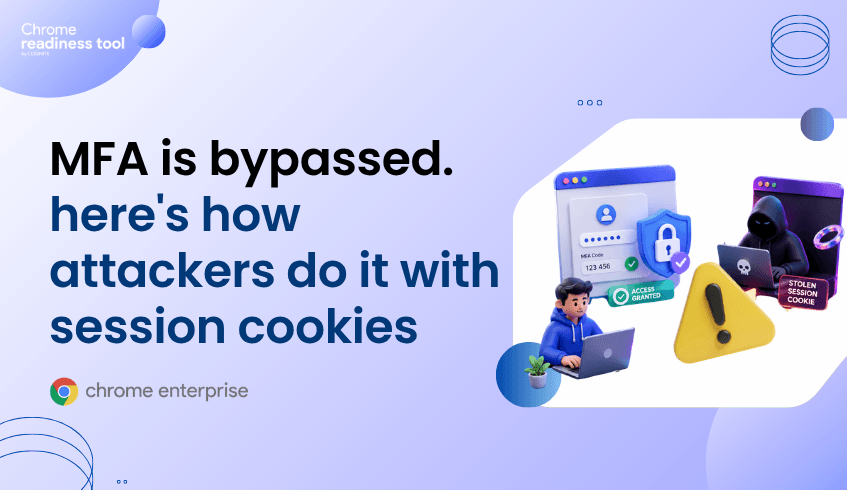
Attackers no longer rely only on stolen passwords. Instead, they target browser-stored data such as session tokens, saved credentials, and autofill information to gain access without triggering traditional security controls.
Where Credential Theft Risks Originate
Credential exposure does not happen in isolation. It is often the result of multiple risk factors across the browser environment:
Outdated Browsers: Older versions may lack the latest protections, making session data easier to exploit
Unverified Extensions: Extensions from unknown or untrusted sources can access browser data and introduce vulnerabilities
Unsecured Domain Access: Visiting non-HTTPS or restricted sites increases the risk of data interception
Local Data Storage: Credentials and session tokens stored on the device can be extracted if not properly protected
These risks compound across applications, allowing attackers to move from one system to another once access is gained.
Chrome Enterprise Premium: Reducing Credential Exposure
Chrome Enterprise Premium (CEP) provides controls to reduce credential theft risk at the browser level:
App-Bound Encryption: Ensures that only the browser can access stored credentials and session data
Policy Enforcement: Applies consistent security controls across all users and devices
Secure Access Controls: Limits how sensitive data is accessed and used within browser sessions
These protections help prevent attackers from extracting usable credentials, even if they gain access to the device.
Identifying Risks with Chrome Readiness Tool
Before applying controls, IT teams need to identify where credential risks exist across their environment. The Chrome Readiness Tool, through its Browser Insights feature, provides this visibility.
Browser Insights evaluates:
Browser and Extension Details: Tracks browser versions and installed extensions across all devices
Security Threats: Flags unverified or outdated extensions and highlights session theft vulnerability based on browser version
Access to Unsecured Domains: Identifies visits to non-HTTPS or restricted domains
Devices running the latest browser version are marked as protected, while outdated browsers are marked as not protected, indicating higher exposure to credential misuse.
The Browser Security Insights dashboard consolidates these findings and assigns a security status to each device. A device is marked Secure only if it has no unverified extensions and no restricted domain activity.
Administrators can drill down into device-level data to view installed extensions, browsing behavior, and session protection status. This enables IT teams to pinpoint which endpoints are most likely to expose credentials across applications.
Understanding Risk with CEP Accelerator
The CEP Accelerator, within Browser Insights, helps translate these findings into actionable insight.
It connects observed risks to Chrome Enterprise Premium capabilities by showing:
Which devices with outdated browsers increase credential exposure across applications
How extension risks and unsecured browsing contribute to credential theft
This turns raw data into a clear plan, helping IT teams focus on the areas that matter most.
Conclusion
Credential theft is no longer limited to stolen passwords. Browser data such as session tokens and stored credentials creates new opportunities for attackers to access multiple applications.
With Chrome Enterprise Premium, organizations can protect credentials through app-bound encryption and policy enforcement. With Chrome Readiness Tool’s Browser Insights, they gain visibility into outdated browsers, risky extensions, and unsafe browsing behavior.
The CEP Accelerator bridges the gap between visibility and action, helping IT teams prioritize and apply the right protections.