The Browser as the New Endpoint: Top Chrome Enterprise Security Features for IT Admins
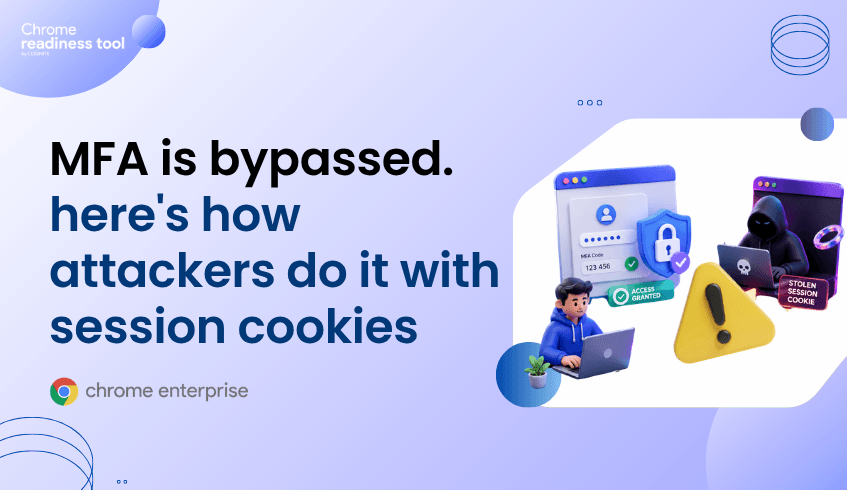
In today’s distributed work environment, the browser has evolved from a simple application into the primary workspace for the enterprise. SaaS platforms, identity providers, internal dashboards, and sensitive workflows all flow through this single surface. As a result, the browser has effectively become the new endpoint and securing it is now a strategic priority for IT teams.
Chrome Enterprise provides a unified security framework that strengthens the browser layer with modern controls, policy enforcement, and deep visibility. Below are the key features every IT administrator should integrate into their security posture.
1. Zero Trust Access & Context-Aware Controls
Zero Trust is now the guiding framework for modern security, and Chrome Enterprise extends this model directly to the browser session.
Context-Aware Access allows IT teams to define who can access what based on real-time conditions:
Device posture: Access can be gated by OS version, management status, disk encryption, and compliance checks via identity partners like Okta or Cisco Duo.
Location and risk signals: If a user logs in from an unusual geography or network, access to high-sensitivity tools can be restricted.
Many of these capabilities operate through agentless deployment, especially with Chrome Enterprise Premium, making them simpler to roll out across mixed environments, including BYOD scenarios.
2. Advanced Data Loss Prevention (DLP)
Data movement inside the browser is one of the fastest-growing enterprise risks. Chrome Enterprise embeds DLP rules directly into the browsing workflow.
Key controls include:
Copy/paste rules that prevent transferring internal content into personal apps.
Print and download limitations for confidential files.
Screenshot restriction on sensitive pages.
With Chrome Enterprise Premium, real-time content scanning detects PII, financial data, or proprietary terms during uploads, downloads, and sharing actions, blocking risky transfers before they happen.
3. Extension Control and Risk Visibility
Extensions increase productivity but can also introduce high-impact vulnerabilities. Chrome Enterprise gives administrators tight control over what is installed and how it behaves.
Core capabilities:
Approved and blocked lists configured directly in the Admin Console.
Permission-based controls that automatically block extensions requesting sensitive access (e.g., webcam, microphone, or full-site data).
Extension risk scoring that highlights high-risk or suspicious plugins across your fleet.
These features transform extension governance from reactive cleanup into proactive risk management.
4. Enhanced Malware and Phishing Protection
Chrome’s security foundation is built on Google Safe Browsing. Enterprise features expand this protection with real-time intelligence.
Enhanced Safe Browsing enforcement: Always-on, real-time checks against Google’s global threat intelligence.
AI-driven detection: Machine-learning models analyze URLs and file behavior to stop zero-day phishing and malware attempts.
Password safety alerts: Users receive immediate warnings if their corporate credentials appear in known breach datasets.
These protections keep users safe even when attackers attempt to bypass traditional network controls.
5. Centralized Cloud Management and Reporting
Managing browser security across Windows, Mac, Linux, and mobile devices requires unified oversight. Chrome Browser Cloud Management (CBCM) delivers that control through the Google Admin Console.
Administrators gain:
Central policy deployment for hundreds of browser configurations across users and groups.
Mandatory updates to maintain the latest Chrome security level across the fleet.
Security reporting dashboards showing high-risk domains visited, blocked actions, and data-related events.
CBCM brings consistency and clarity to an environment where browser behavior varies widely across users and devices.
6. Strategic Platform Security With the ChromeOS Readiness Tool
Securing the Chrome browser is a strong start, but many organizations aim to move toward an inherently secure platform: ChromeOS. The ChromeOS Readiness Tool helps IT teams evaluate their current device fleet and identify where a transition to ChromeOS or ChromeOS Flex can strengthen long-term security.
Its insights directly reinforce the browser-security strategies outlined above:
Centralized visibility into extension usage: The tool captures browser and extension activity across assessed devices, helping IT teams identify high-risk or unnecessary extensions before broader policy rollout.
A path toward Zero Trust by default: ChromeOS is built on hardware-backed security and verified boot, aligning with the same Zero Trust principles applied in the browser. The Readiness Tool reveals which users and workflows are ready for that shift and where compatibility gaps remain.
By combining Chrome Enterprise’s browser protections with a strategic move toward ChromeOS, IT teams can turn the browser from a point of exposure into a powerful, policy-driven security front line, strengthening the entire enterprise environment from the first click to the last.